
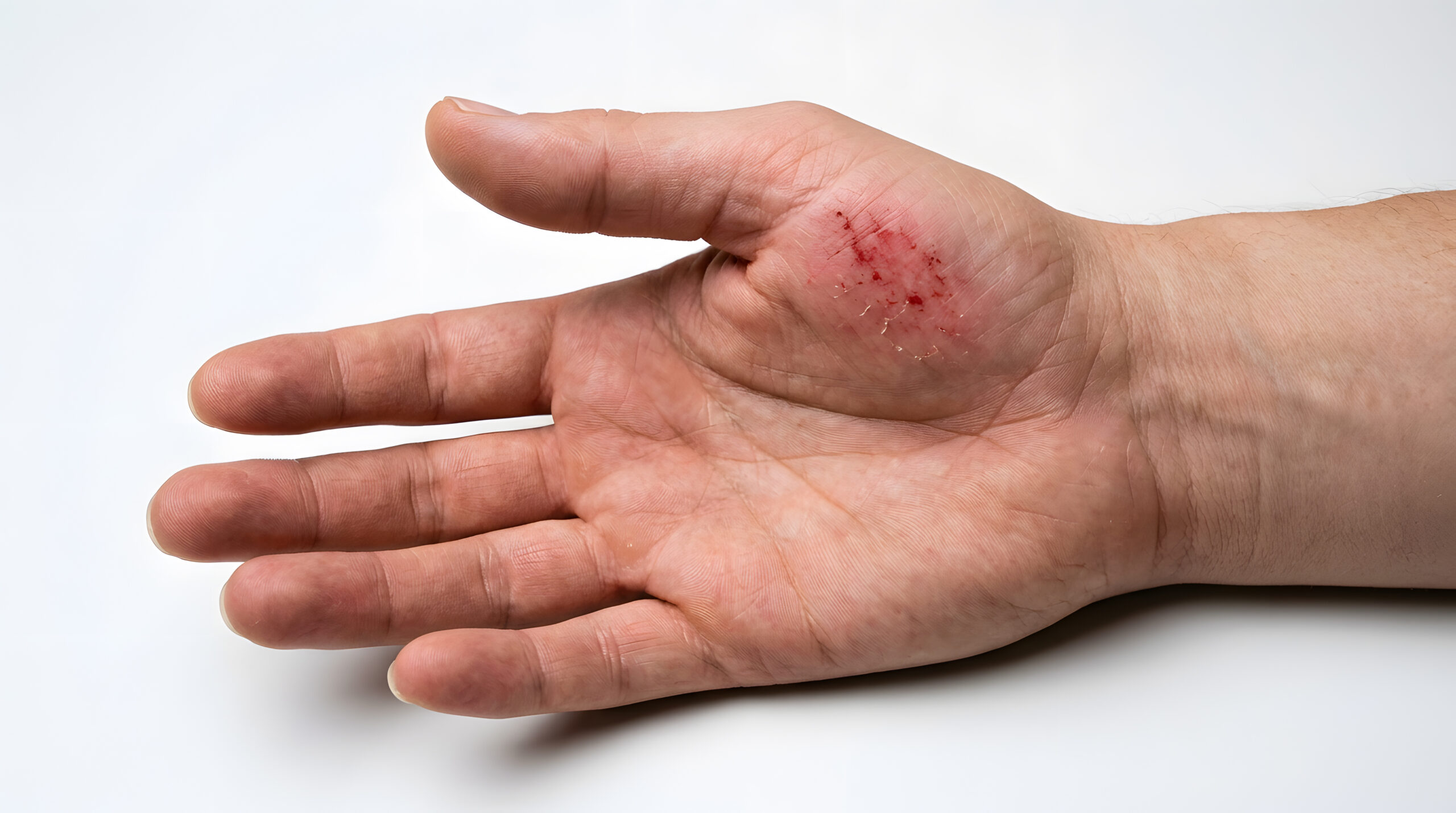
Gloves provide critical protection in trucking, warehousing, and fleet maintenance, where workers routinely face hazards such as rough materials, sharp edges, puncture hazards, and pinch points. Wearing the appropriate gloves helps reduce the risk of hand injuries and supports safe job performance. Selecting the right gloves, inspecting them before use, and replacing damaged gloves are essential parts of hand protection.
Hazards
Your hands may be exposed to a wide range of hazards; these are some of the more common hazards in the trucking industry.
Physical Hazards
Abrasion Hazards
Repeated handling of boxes, tires, and tools can cause scrapes, blisters, and skin wear.
Sharps
Cuts and lacerations from sharp edges on pallets, trailers, straps, chains, and dock plates.
Pinch Points and Impact
Hands or other body parts can be caught between moving or heavy equipment, such as during coupling, landing gear operation, or trailer door use.
Puncture Hazards
Nails, splinters, wire strands, damaged freight and other sharp objects can puncture the skin.
Psychosocial Hazards
Complacency
Becoming overly comfortable during routine or repetitive tasks, leading to failure to use required PPE.
Rushing and Shortcuts
Performing tasks too quickly or taking unsafe shortcuts to save time can increase the likelihood of incidents, and injuries.
Controls
Personal Protective Equipment (PPE) is the final level in the hierarchy of controls and is used to reduce worker exposure when higher-level controls are not feasible or sufficient. PPE should always be implemented in combination with other control measures to ensure effective hazard protection.
Gloves must be selected based on the hazards of the task being performed. No single glove protects against all hazards. Workers should ensure gloves fit properly, are in good condition, and provide the appropriate level of protection.
General Work Gloves
These gloves are intended for light-duty hand protection tasks where hazards are minimal and the risk of injury is low.
Protection
- Provides basic protection against dirt and minor scrapes and abrasion
- Improves grip when handling materials
- Allows good dexterity for routine work tasks
Abrasion, Puncture and Cut Resistant Gloves
These gloves are intended for tasks involving sharp materials or edges where there is a moderate to high risk of cuts, abrasions, or punctures.
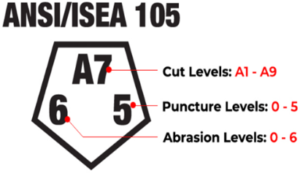
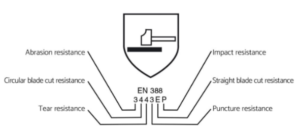
Special Note – There are two common glove rating standards for Abrasion, Puncture and Cut Resistant Gloves. They are ANSI/ISEA 105 Glove Rating and EN388 Glove Rating.
Protection
- Provides protection against cuts, lacerations, punctures, and abrasion
- The higher the number or letter the greater level of protection provided within the standard
Impact Resistant Gloves
These gloves are intended for tasks where impact hazards are present, particularly during close-quarter work where pinch points are common.
Protection
- Provides protection to the back of the hand and knuckles from impact hazards
- ANSI/ISEA 138 Glove Rating
- Impact rating ranges from Level 1 to Level 3
Prevention
Inspect Before You Use
Before putting gloves on, do a check for:
- Verify the glove type
- Check for holes, tears, or worn fingertips
- Ensure gloves are not saturated or contaminated
- Look for hardening, cracking, or stiffness
- Confirm grip coating is intact
Replace gloves if any damage is found!
Proper Use on the Job
- Wear the appropriate gloves before contacting the hazard(s)
- Ensure gloves fit properly
- Too loose → reduced control
- Too tight → restricted movement
- Keep gloves clean and dry whenever possible
Glove Care and Storage
Proper glove care helps maintain safety, performance, and comfort.
- Clean reusable gloves according to manufacturer instructions
- Allow gloves to fully dry before reuse
- Store gloves in a clean, dry location (avoid dashboards, tires, or shop floors)
- Do not share gloves with others
Regulations
Provincial
Manitoba Workplace Safety and Health Regulation, Part 6 – Personal Protective Equipment
Standards
ANSI/ISEA 105 – Standard for classifying cut, puncture, and abrasion resistance of hand protection
EN 388 – Standard for protective gloves against mechanical risks (abrasion, cut, tear, puncture, and impact)
Glove Rating Systems
ANSI/ISEA 105 Glove Rating
ANSI/ISEA138 Glove Rating

EN388 Glove Rating
Need more information? RPM can help!
Hazard Identification and Risk Control: Recognizing what could injure workers on the job is the first step to ensuring that they stay safe. A proactive approach to the mitigation of workplace hazards greatly increases the chance of less severe and lower rates of injury. This course will provide students with the practical knowledge necessary to identify, assess and control the hazardous elements of their workplace so they can do their part in preventing dangerous incidents.
Emergency First Aid: CPR Level C and AED: This first-aid and cardiopulmonary resuscitation (CPR) course provides the skills needed to recognize and respond to cardiovascular emergencies and choking for Adults, Children and Infants. This course is provided by RPM Trucking Industry Safety and is suitable for workplace requirements.
Make sure you visit our Safety Talks page to view this as a pdf. While you’re there, check out RPM’s many other Safety Talks to use at your business!