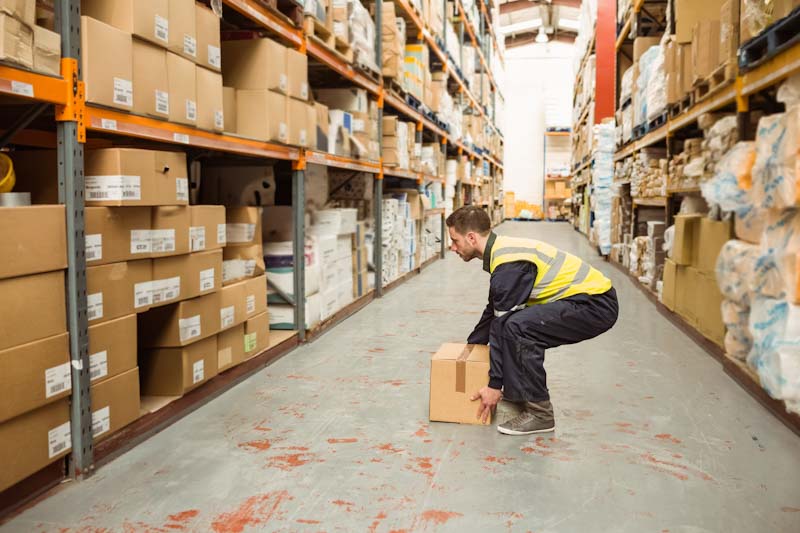
Lifting is one of the most frequently performed physical tasks in the workplace. Manual lifting is conducted by both office and operations staff within all industries. Investigations have found that poor manual lifting techniques often result in injuries to the back, neck, shoulders, and arms. These injuries can cause significant short- and long-term impacts on workers, limiting their ability to perform job tasks, as well as participating in activities outside of work. Identifying manual lifting hazards and implementing appropriate safety measures is essential to reducing the risk of injury.
Hazards
Lifting Frequency and Duration
Repetitive lifting and holding loads for long periods of time increases the risk of injury because your muscles become starved of nutrients and waste products accumulate. Rest breaks are necessary to allow your body to recover.
Weight of Load
The weight of a load can lead to serious injury if it is not properly assessed and managed. Where possible, the load should be broken down into smaller, lighter components. This way you are not manually lifting a load that is too heavy.
Inadequate Grip or Handles
Inadequate handholds, such as boxes without handles or irregularly shaped loads, make lifting more difficult and increase the risk of contact stress or dropping the load. Repackage loads, when possible, into containers that have good handholds and are easier to lift properly.
Awkward Postures
Carrying loads on your shoulder, under the arm, or in one hand creates uneven pressure on the spine. Keeping the load close to the body, within the “power zone” (mid-thigh to mid-chest) helps minimize the strain on your muscles.
Environmental Factors
Be aware that extreme temperatures that can affect lifting and material handling. Muscle flexibility decreases in cold temperatures and increases the risk of strains. Hot temperatures can cause fatigue and heat stress, which reduces concentration and lifting efficiency.
Controls
Preparation
Personal Protective Equipment (PPE)
CSA safety boots with toe caps and slip-resistant soles.
Gloves that fit and are appropriate for the material being handled (loose gloves affect your grip).
Gloves recommended for material handling are gloves such as leather gloves, coated fabric or synthetic gloves, cut-resistant gloves, impact resistant gloves, or work gloves with textured palms. Depending on the material, these gloves can improve your grip and protect your hands.
Physical Assessment
Assess your physical readiness.
Prepare for the lift by warming up your muscles prior by stretching.
Check your posture, balance, and any existing discomfort or limitations that can affect your capacity to lift.
Load Securement
Contents of the load are stable and balanced (repack and secure load to prevent shift while carrying).
Location / Pathway
Check that the planned location for the load is free of obstacles and debris.
Check that the pathway to the planned location is clear.
Assessing Weight of the Load
Use a mechanical aid when available for heavy loads (hoists, lift trucks, dollies, pallet jacks or wheelbarrows).
Check that the load is free to move.
Be sure that you can lift the load without over-exertion.
Get help from a second person for heavy or awkward loads.
Steps For Safe Lifting
- Test the load. Testing the load by grabbing a corner of the box or item and giving it a push, tapping it with your toe, or grabbing it lightly with both hands and applying a little force.
- Can you lift it yourself?
- Is the load balanced across the entire lifting area?
- Is the load stable?
- Are there any good hand holds?
- Face the direction you want to travel.
- Bend with your knees.
- Get a good grip on the load.
- Keep the load as close to your body as possible.
- Tighten both the abdominal and lower back muscles.
- Keep your back straight.
- Lift by straightening your legs.
- Turn using your feet.
- Put the load down using the lifting technique.
Prevention
Important:
DO NOT lift if you are not sure that you can handle the load safely.
DO NOT lift with back bent and legs straight.
DO NOT twist your body when lifting.
DO NOT bend to the side to lift a load.
DO NOT hold your breath when lifting.
Always take appropriate precautions, such as warming up muscles in the cold or staying hydrated and taking breaks in the heat.
Regulatory Reference
Canada Occupational Health and Safety Regulations Section 14.46(1)-14.49
Employers must provide instruction and training for manual lifting tasks over 22lbs, avoid manual handling where hazardous and provide written procedures for heavy lifts.
Manitoba Workplace Safety and Health Regulations 217/2006 Part 8- Musculoskeletal injuries/Risk Assessments
Employers must assess risks that could lead to musculoskeletal injuries, including risks associated with manual materials handling tasks (lifting, carrying, lowering, etc.). Employers must then train workers in appropriate control measures to eliminate or reduce these risks.
Need more information? RPM can help!
Book the Journey to Safety Trailer!
Let us come to your workplace to provide demonstrations of how simple steps can increase safety! The RPM Journey to Safety trailer is an exciting and eye-opening experience that RPM is delighted to bring to your workplace. The demonstrations consist of life-like scenarios including hand safety, safe lifting, head safety, eye safety, and working from heights: travel restraint. For more information and to book a safety demonstration, please CLICK HERE.
Hazard Identification & Risk Control (eLearning course)
Recognizing what could injure workers on the job is the first step to ensuring that they stay safe. A proactive approach to the mitigation of workplace hazards greatly increases the chance of less severe and lower rates of injury. This course will provide students with the practical knowledge necessary to identify, assess and control the hazardous elements of their workplace so they can do their part in preventing dangerous incidents. For more information and to register, please CLICK HERE
Looking for more great resources like this? Visit our Safety Talks page!