Workers in the transportation industry may be exposed to situations where contaminants can get into their eyes. These exposures can occur during normal tasks, especially when working with or around small particles, liquids or vapours. When an eye injury occurs, it is important that you know how to properly use an eyewash station and that the station is readily accessible and in good working order.
Hazards
Eyewash stations are a critical form of emergency equipment and must function properly when needed; otherwise, eye injuries can become significantly more severe. Hazards of improper use and maintenance eyewashes include:
No water
- If there is no water supply available, it will not work.
Contaminated water
- Bacteria, rust, and dirt can build up in stagnant water and cause infections in the eyes.
Water pressure
- Too high can cause damage to the eyes.
- Too low may not flush out the contaminants.
Extreme water temperatures
- Hot water can cause burns or accelerate a chemical reaction of contaminants.
- Cold water may cause corneal frostbite.
- Both are uncomfortable and may cause the worker to stop flushing.
Draining substances or washing materials in the eyewash
- Can damage the unit, allowing contaminants to enter
- May block the nozzles or introduce bacteria
- Can lead to eye infections when the station is used
Dangerous routes to the station
- Stairs: Stations located up or down stairs can be difficult for an injured worker to access quickly.
- Service/Grease Pits: Pits located between the worker and the station pose a serious hazard, as workers with impaired vision may fall into them.
- Blocked Access: Boxes, pallets, or equipment can obstruct the path to the station.
- Trip Hazards: Tools, cords, parts, garbage, or other debris on the floor can become significant tripping hazards, especially when a worker’s vision is impaired.
Controls
How to inspect an Eyewash Station
Properly maintained eyewash stations are critical for reducing the severity of eye injuries by allowing immediate flushing of contaminants from a worker’s eyes.
Weekly
Plumbed Eyewash
- Easily reached (no obstructions)
- Labels and signs are clear
- Activate the eyewash station by pressing the handle
- Water flows from both outlets and is clear
- Temperature is comfortable to the touch
- Water drains as designed
- Stop the water flow (put back the handle) and reset the protective eye covers
- Record on the inspection tag
Self-contained/Portable Eyewash
- Easily reached (no obstructions)
- Labels and signs are clear
- Check the exterior for cracks, dents, or wear on the tank, lid, and nozzles.
- Check the label for the refill and expiration dates (preservative additive)
- Fluid levels are within the recommended range (typically 80–100%) or fill line.
- Shine a light to check for sediment or cloudiness in the solution.
- Look for corrosion or residue buildup around fittings or nozzle covers.
- Record on the inspection tag.
Handheld Eyewash Bottles
- Easily reached (no obstructions)
- Labels and signs are clear
- Check the seal and expiry date
- Shine a light to check for sediment or cloudiness in the solution.
- Look at the bottle for cracks or damage
- Record on the inspection tag
If any Eyewash Station or Bottles are found to be defective in any way, immediately tag them ‘Out of Service’ and report it to a supervisor or manager for repair.
Per the ANSI standard, annual inspections of eyewash stations are also required; please check with the manufacturer about annual inspections.
How to use Eyewash Stations
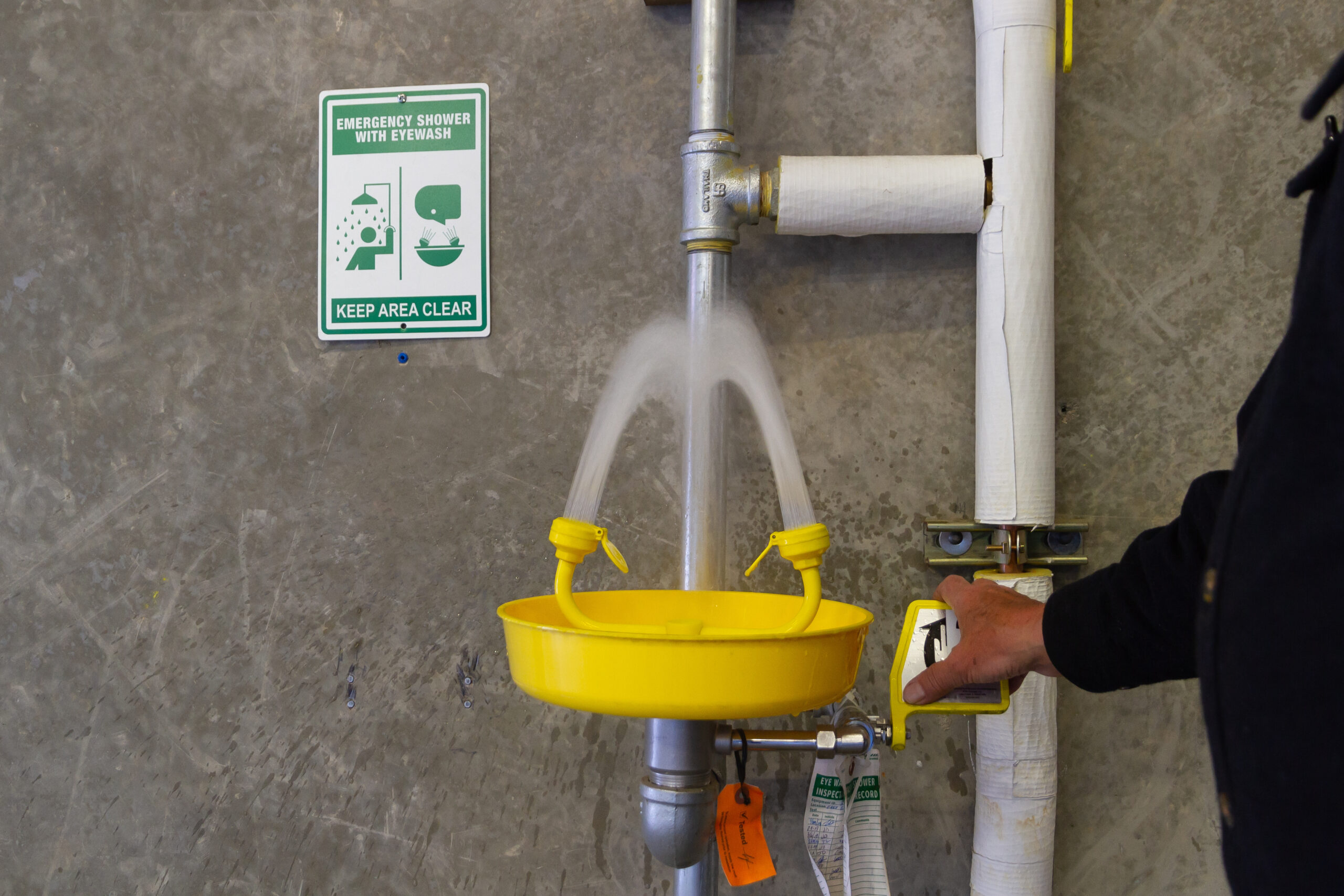
Plumbed Eyewash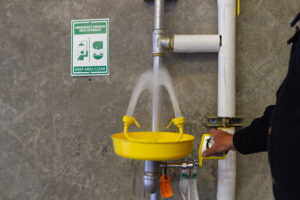
- Push the handle to start the water—nozzle covers should come off automatically.
- Lean forward and place your eyes in the water stream.
- Hold your eyelids open with your fingers and roll your eyes.
- Flush for at least 15 minutes, or as directed by the Safety Data Sheet (SDS).
Self-contained/Portable Eyewash
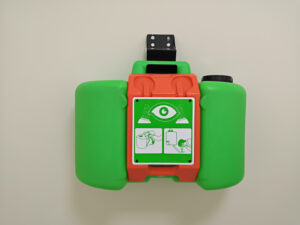
- Pull down the activator—the water will start flowing immediately.
- Lean forward and position your eyes in the water stream.
- Hold your eyelids open with your fingers and roll your eyes.
- Flush for at least 15 minutes, or as directed by the Safety Data Sheet (SDS).
Handheld Eyewash Bottles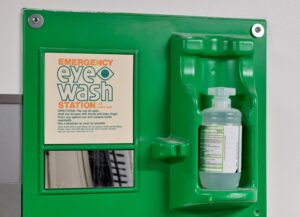
- Remove the cover.
- Lean forward and press the eyecup firmly against the affected eye.
- Squeeze the bottle to create a steady stream while rolling your eye to rinse thoroughly.
- Immediately go to a portable or fixed eyewash station for continued flushing.
Special Note: Eyewash bottles are not a substitute for a plumbed or self-contained eyewash station. They are intended for immediate, short-term use only and should be followed by rinsing at a proper eyewash station. Most bottles are designed to flush one eye at a time, not both simultaneously.
Prevention
How to prevent eye injuries
Protecting your eyes is essential, as dust, debris, and chemicals can cause serious injury. Reduce risks by eliminating hazards, using safer substitutes, and improving conditions with tool guards, ventilation. Support safety by keeping work areas tidy, staying out of hazardous work areas when you don’t need to be there, following your training and procedures, and always wearing PPE like safety glasses and face shields when hazards are present.
Things to Know
- Where are the eyewash stations located?
- Can you get to it with your eyes closed?
- Have you ever tested the equipment to find out how it works? (Do this with a supervisor)
Regulations
Federally Regulated
Canada Occupational Health and Safety Regulations, 16.8 (1) require an employer to have eye wash facilities for immediate use by employees. It does not specify the care and use of this equipment; best practice would be to follow ANSI Standard Z358.1-2014.
Provincially Regulated
Manitoba Workplace Safety and Health Act and Regulation
Part 21 Emergency Washing Facilities, 21.2 requires employers to install, test and maintain as per ANSI Standard Z358.1-2014 and manufacturer guidelines.
Need more information? RPM can help!
Hazard Identification and Risk Control: Recognizing what could injure workers on the job is the first step to ensuring that they stay safe. A proactive approach to the mitigation of workplace hazards greatly increases the chance of less severe and lower rates of injury. This course will provide students with the practical knowledge necessary to identify, assess and control the hazardous elements of their workplace so they can do their part in preventing dangerous incidents.
Emergency First Aid: CPR Level C and AED: This first-aid and cardiopulmonary resuscitation (CPR) course provides the skills needed to recognize and respond to cardiovascular emergencies and choking for Adults, Children and Infants. This course is provided by RPM Trucking Industry Safety and is suitable for workplace requirements.
Workplace Inspection Training: This course will give people the opportunity to explain the requirements and the purpose(s) of a workplace inspection, know what you’re looking for and how to identify a hazard, the process of what to do when there are inspection findings, and understand the process for implementing corrective actions and how to monitor and identify trends.
Make sure you visit our Safety Talks page to view this as a pdf. While you’re there, check out RPM’s many other Safety Talks to use at your business!